Application Scenarios
High Temporal Resolution Charge and Carrier Dynamics
Combined with pump-probe technique, USM-SPE enables the observation of ultrafast charge transfer and relaxation process on femtosecond to nanosecond time scales. This detailed processes provides unprecedented insights into the diagnosis of charge separation in photocatalysis and is essential for the design of efficient photocatalysts.
Time resolution is achieved through the use of pump probe technology, where pump pulses excite the sample and probe pulses measure the resulting electron dynamics (Figure 1). This makes it possible to observe ultrafast processes such as charge transfer and carrier relaxation in real-time. This technology has significant potential in advancing our understanding of photocatalytic mechanisms and guiding the development of more efficient photocatalytic systems.
USM-P uses spatial imaging technology to obtain high-resolution images, combined with high-resolution pump probe technology, to observe ultrafast processes such as charge transfer and carrier relaxation on the femtosecond to nanosecond time scale. The case involves tracking the charge transfer process on photocatalyst particles. Figure 2 indicates that effective electron transfer occurs between different surfaces on the sub picosecond time scale, originating from unconventional quasi ballistic states. And hole transfer mainly involves defect capture at the microsecond scale. The detailed knowledge of this microscopic process provides unprecedented insights into diagnosing the bottleneck of charge separation in photocatalysis, which is essential for the rational design of efficient photocatalysts.
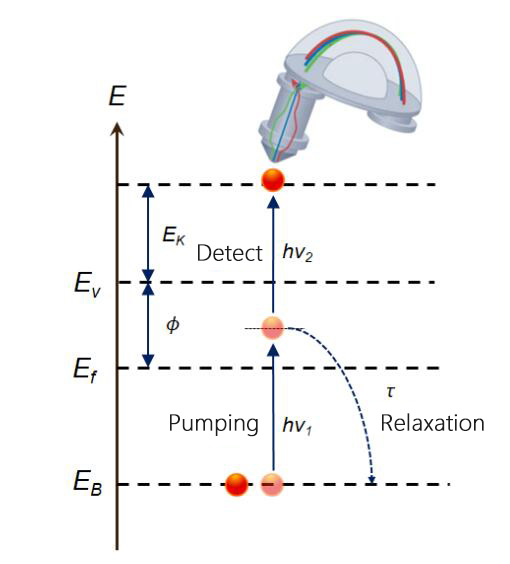
Figure 1: Schematic diagram of pump detection principle.
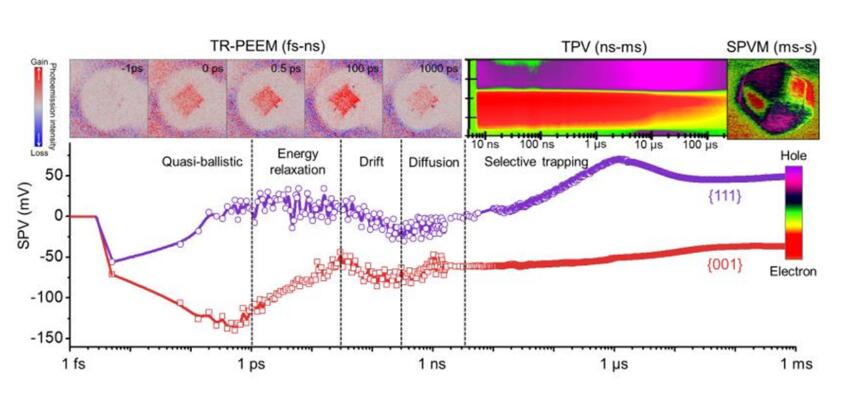
Figure 2: Surface Photopotential (SPV) measurements on femtosecond to millisecond time scales to track charge transfer processes on photocatalyst particles, from Nature 610, 296-301 (2022).